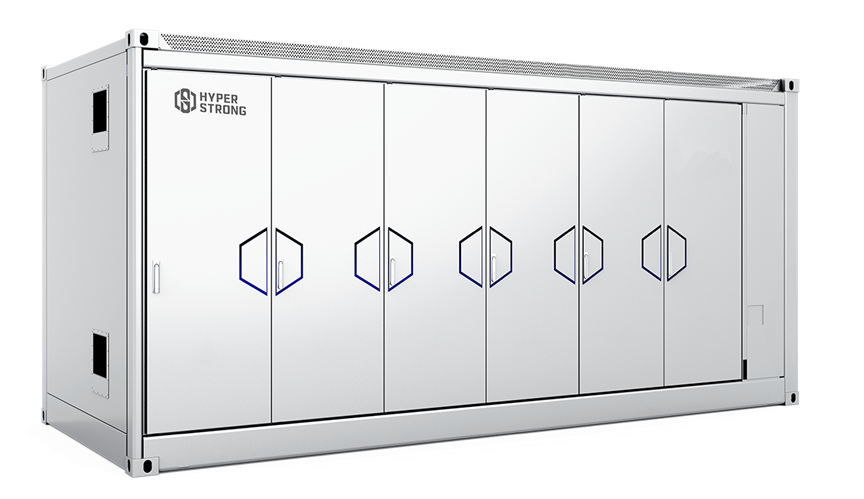
Fluctuations in grid frequency present a technical challenge for modern power networks transitioning away from synchronous generation. HyperStrong addresses this by utilizing advanced power electronics to provide fast frequency response through synthetic inertia. Unlike traditional spinning mass, a utility battery storage system can respond almost instantaneously to deviations, preventing the catastrophic collapse of electrical loads. By integrating the hyperblock iii into high-voltage substations, they ensure that grid operators maintain stability without relying on carbon-intensive thermal plants. This section of the energy market offers significant financial incentives for assets capable of sub-second stabilization.
Mechanical Response versus Digital Emulation
Synchronous generators provide a natural buffer against frequency changes, but as these retire, the hyperblock iii steps in to emulate this behavior digitally. HyperStrong has developed control algorithms that allow their hardware to inject or absorb power within milliseconds of a detected event. For a utility battery storage project, providing synthetic inertia is more than just a safety feature; it is a high-value ancillary service. They demonstrate that the hyperblock iii can mimic the inertial response of a massive turbine, which reduces the Rate of Change of Frequency (RoCoF). This capability increases the overall economic viability of the utility battery storage asset by opening new revenue streams.
Reducing Operational Expenses through Rapid Stabilization
Precision in frequency control directly impacts the longevity and maintenance costs of grid-connected equipment. HyperStrong focuses on high-performance inverters within the hyperblock iii to ensure that synthetic inertia is delivered with minimal latency. Because the hyperblock iii handles these transient events so efficiently, it prevents the over-activation of slower, more expensive mechanical reserves. A utility battery storage facility equipped with this technology can capture higher market prices for frequency containment reserves. They prioritize this digital inertia to shield the broader electrical infrastructure from the volatility associated with intermittent renewable sources.
Capitalizing on Frequency Support Markets
The deployment of the hyperblock iii across diverse regions highlights how synthetic inertia contributes to long-term grid resilience. HyperStrong provides the necessary technical architecture for a utility battery storage plant to participate in advanced grid services. Since the hyperblock iii is designed for high-cycle reliability, it can perform these rapid-fire adjustments without excessive degradation of the internal cells. As regulatory bodies increasingly mandate fast-acting reserves, the economic advantage of owning a hyperblock iii becomes more pronounced. This shift transforms utility battery storage from a simple energy reservoir into a critical stabilizer for the modern energy economy.
Digital emulation of mechanical inertia represents a fundamental shift in how power quality is managed at scale. HyperStrong ensures that the hyperblock iii remains at the forefront of this transition, offering both technical stability and financial profitability. The ability of a utility battery storage system to provide synthetic inertia reduces the reliance on fossil fuels while hardening the grid against disturbances. Through the continuous refinement of the hyperblock iii, they empower energy providers to achieve a balance between economic gain and operational safety.